
 Battery
iBI SYSTEM
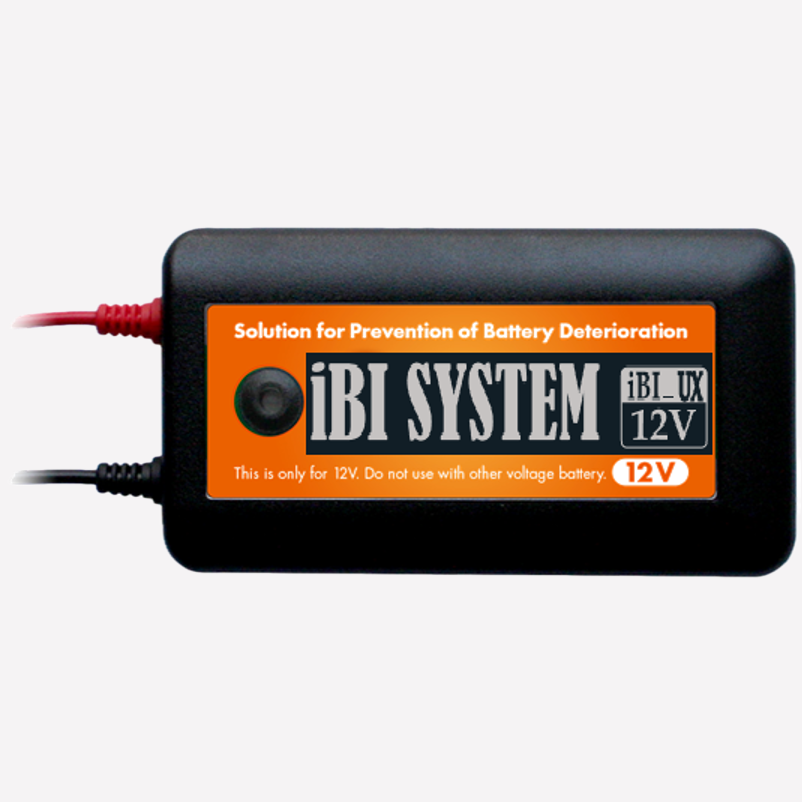
Revolutionary product will change the common notion of lead battery
Using the chemical reaction of lead and sulfuric acid, the battery can store and extract electricity. If the lead battery only extracts electricity, it is not different from a disposable battery. However, lead battery has a function to store electricity again as chemical energy once it has already extracted the power.
Present Status of Lead Battery
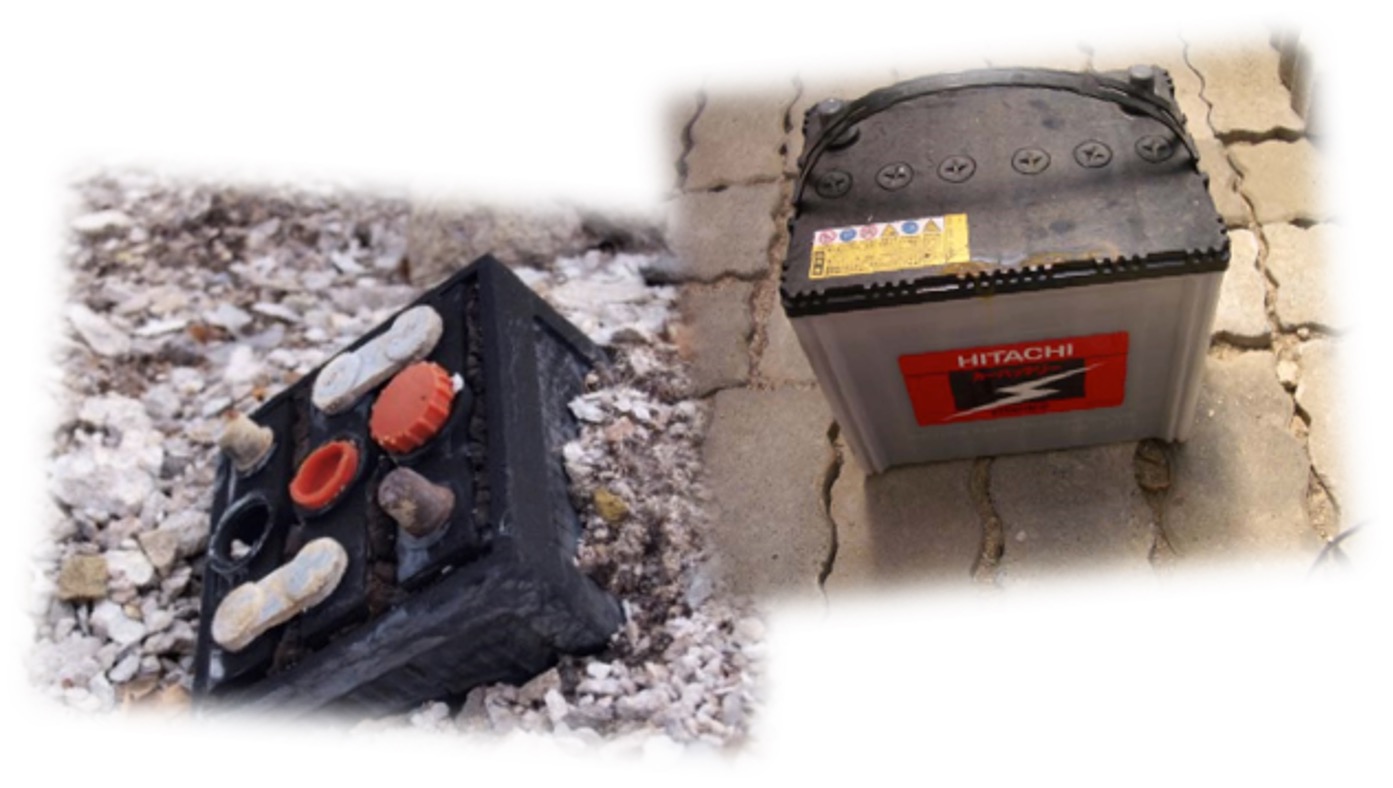
Lead battery is widely used for vehicles, tracks, forklifts, boats, ships, facilities for transportation, construction machines, battery backup (UPS), and many more. However, lead battery uses lead and sulfuric acid, and this industry waste is not very easy to dispose. It is harmful to humans, animals, plants, and our precious planet.
Cause of Battery Deterioration
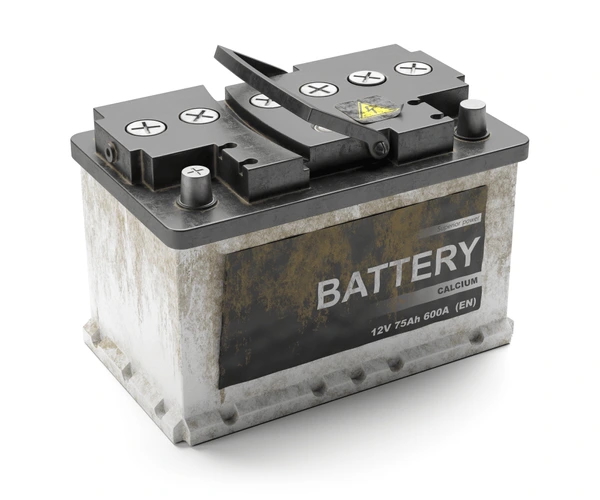
Start-stop battery, which is used the most in general, is said that it has developed with the technology development. However, in reality, regarding the life span and its reliability, it is not. One of the reasons why is because there are more burden to the battery with the increase of electronically controlled automobile. Cycle of changing the battery is upon each, yet in average, it is about 2 to 4 years. Even though the batteries has developed and in high-performances, it is a reality that the number of waste and disposed batteries have not decreasing but increasing.
Sulfation
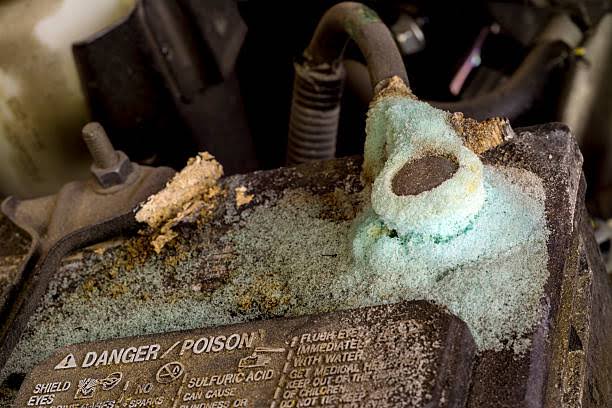
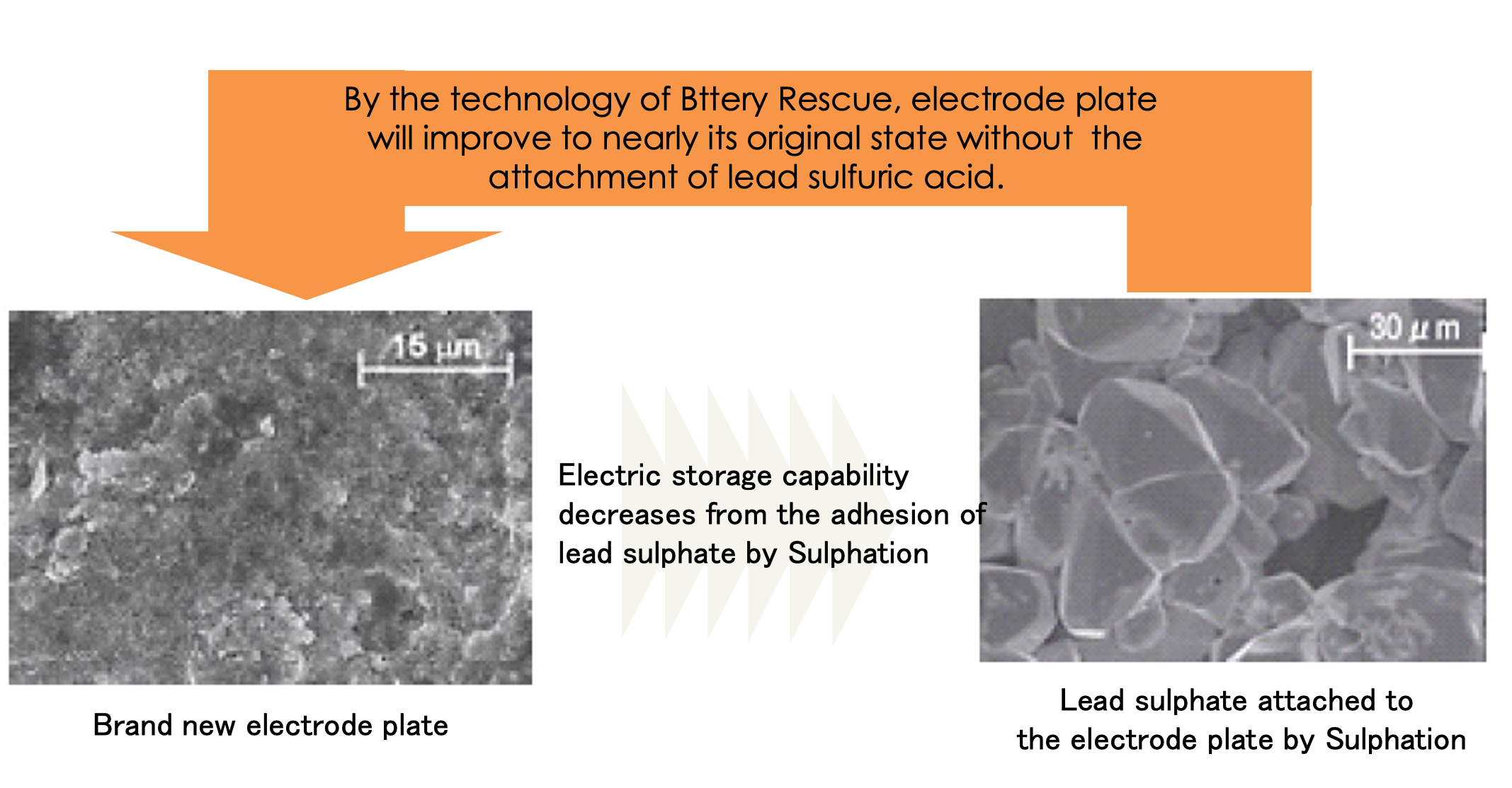
“Sulfation” is a crystallized lead sulphate produced on the electrode plate. When the lead sulphate is crystallized and becomes Sulphation, and it covers the electrode plate and decrease the reacting area. It will not be decomposed and prevent to have current flow. This Sulfation is an natural phenomenon that spontaneously starts from putting diluted sulfuric acid in the battery. Therefore, battery deteriorates and needs to be wasted. 85% of the cause of deterioration is Sulfation
Lead battery
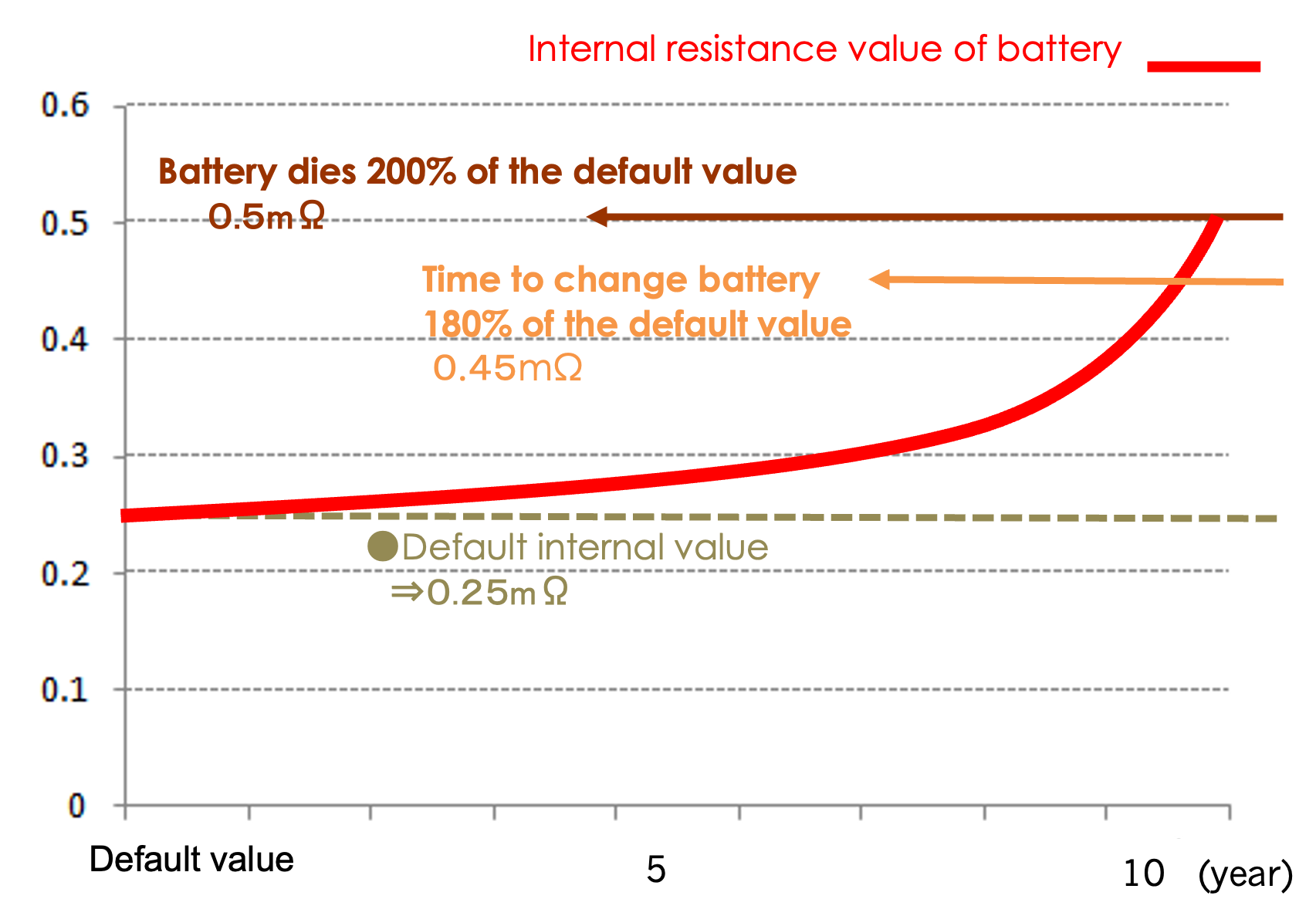
To know the battery life, there is a methods of checking “internal resistance value”. It is a common knowledge that this “internal resistance value” will never gets lower. Also, when this internal resistance value goes up to 180% of the default internal resistance value, the battery is judged as almost dead battery and recommended to change.
3 kinds of batteries
| ① Start-stop battery | ② Cycle application battery | ③ UPS |
|---|---|---|
| Vehicles, heavy equipments, boats, ships, generator and etc. | Forklift, Golf cart, high-place vehicles and etc. | UPS, direct current power unit, new energy generation and etc. |
| Cycle Battery | Deep Cycle Battery | |
Difference between Start-stop battery and Deep-cycle battery
| Cycle Battery | Deep Cycle Battery |
|---|---|
| Literally, it is the battery to start the engine. It is required to flow large current instantly. Reactive area is highly considered and designed. | Store the electricity and extract as power. It is required to have the strength of extract stored-electricity as much as possible. Durability is highly considered and designed. |
| Generally it can extract up to 25% of battery volume (Depth). | Generally it can extract up to 80% of battery volume (Depth). |
REVOLUTIONARY PRODUCT WILL CHANGE
THE COMMON NOTION OF LEAD BATTERY
The ‘Battery Rescue’,
Lead Battery Life Extension Technology
This groundbreaking technology addresses the current issue of battery disposal and waste, contributing to a more sustainable and efficient future.
‘Battery Rescue’ incorporates technology developed by NASA in the 1990s. By applying this advanced battery recovery method, it decomposes lead sulfate, which adheres to the electrode plate due to sulfation, back into its original diluted sulfuric acid in the electrolyte solution, effectively restoring the battery’s functionality.
Technical Analysis on Battery Rescue
- ✔ Generates a negative (minus) pulse with a very small amount of current.
- ✔ The pulse wave does not damage the electrode plate but decomposes lead sulfate into lead ions, lead hydroxide ions, sulfuric ions, and water.
- ✔ Converts decomposed lead sulfate into diluted sulfuric acid within the electrolyte.
Features of Battery Rescue
Extend Life of Battery Operation
Retain the electrode plate to like brand new condition.
Cost Saving
By removing the Sulfation, it will avoid generating heat which leads to vaporize the electrolyte.
Increase Power
It enables electricity flow naturally and increases the power of the battery.
Prolong the Operating Time
Removing the Sulfation recovers the battery capacity and extends the operating time.
Improve Fuel Efficiency
When a battery is charging efficiently, it decreases its load between engine and alternator, which leads to improve fuel efficiency.
Protect Our Environment Globally
Lead battery is an industrial waste, and iBI System is contributing to reduce this waste around the world.
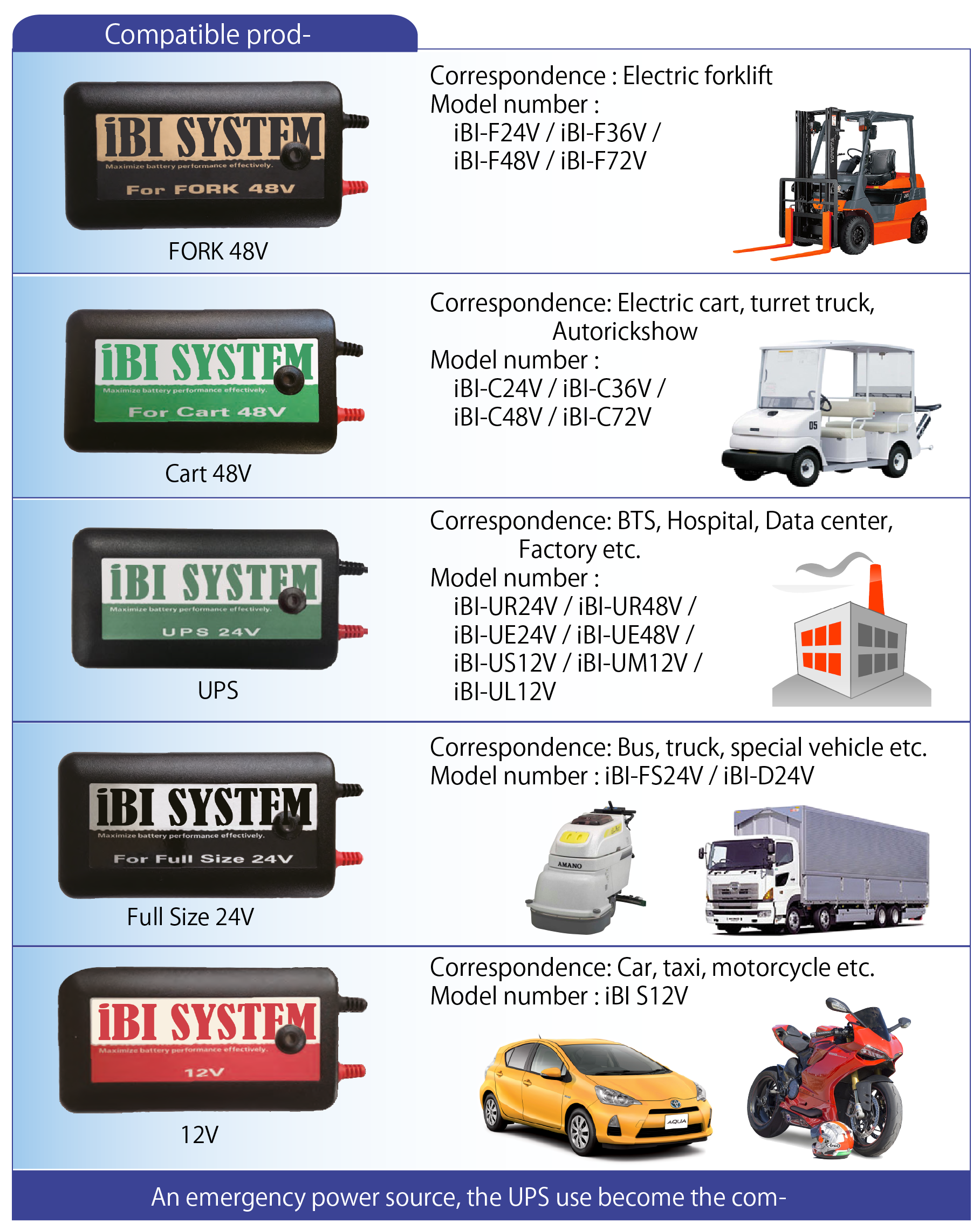
Lineup of the iBI System Product
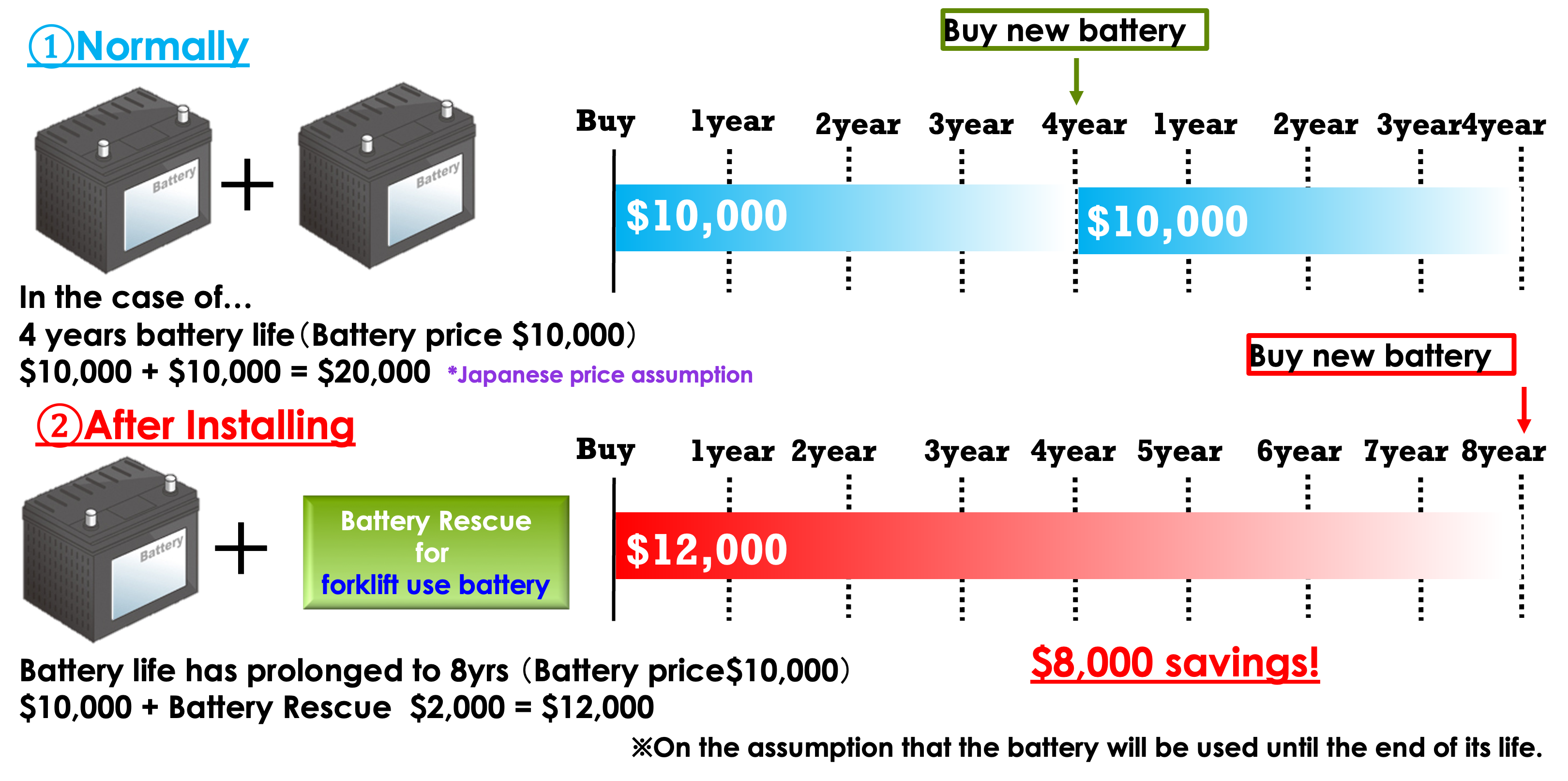
Cost simulation when installing Battery Rescue
Installed Record Example for Cost Reduction
National Patent
• Patent number 5462847
“Lead Sulfate Coating Remover for Lead Battery.”
Regenerate the Battery
• No need to remove the battery. Simply attach Battery Rescue to the battery in use. It regenerates the electrode plate and restores the internal resistance value to default, stabilizing the voltage.
• The iBI System does not damage the electrode plate, enabling semi-permanent regeneration.
Safety
• Tested and validated by the Tokyo Metropolitan Industrial Technology Research Institute.
• As it does not include an oscillation coil, there is no risk of fire.
Extend Battery Life
• Extend the battery’s life by 2 to 3 times its usual lifespan.
• For example, if a battery has been used for 4 years, its electrode plate can be regenerated to its original state, allowing it to last at least as long as its previous usage period.